Professor Keishla Rivera-López has been exploring the lyrics and music of Puerto Rican artist Bad Bunny for some time. She is fascinated by the idea that Bad Bunny himself might be doing archival work through his lyrics, which are firmly grounded in Puerto Rican culture.
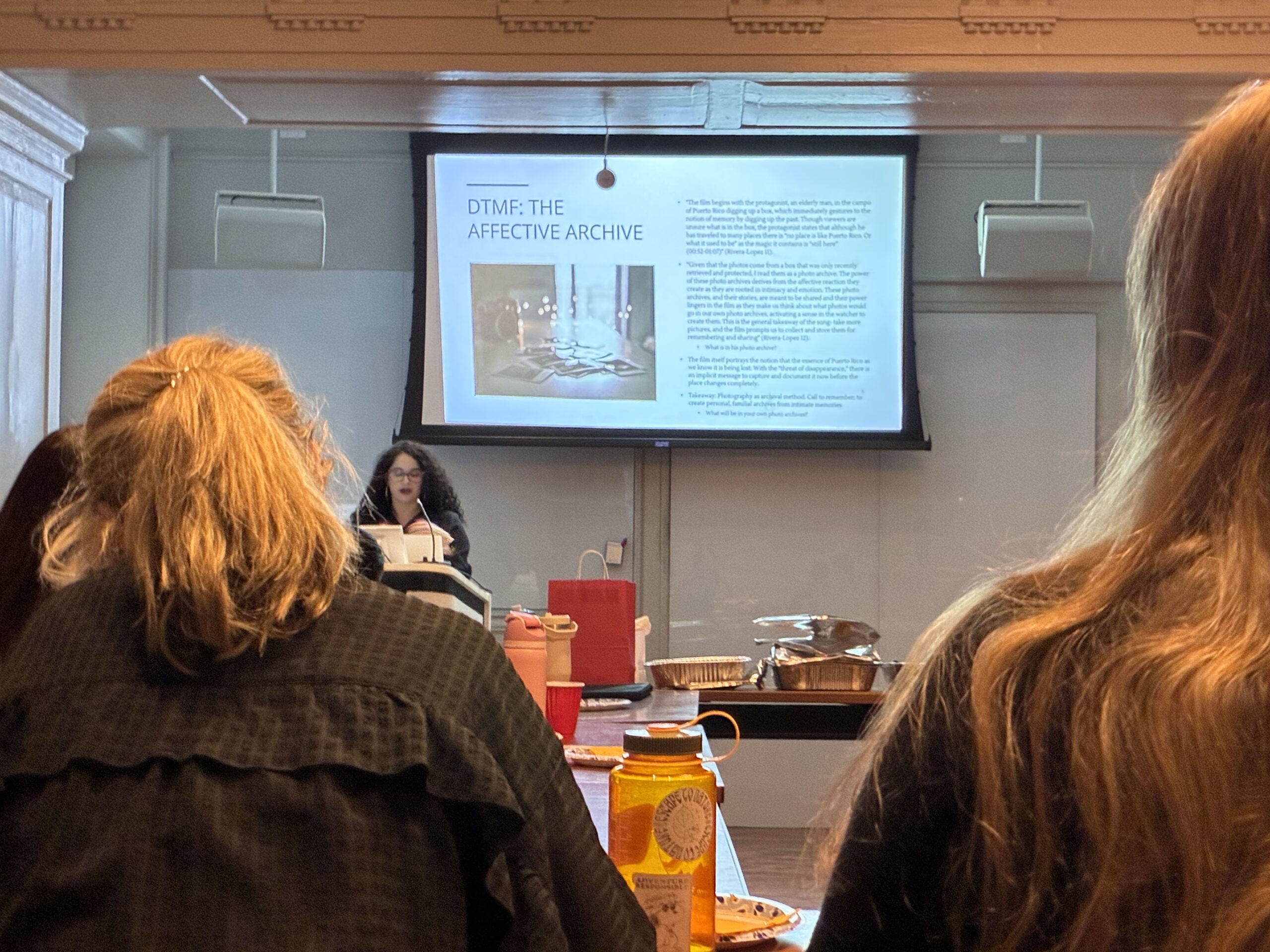
The Puerto Rican Student Alliance of Haverford hosted Rivera-López, a visiting assistant professor in the English Department, to give a teach-in called ‘Bad Bunny the Archivist: Preserving Puerto Rican Memory and Culture’ on Nov. 4. The event included delicious Puerto Rican food and a screening of two of Bad Bunny’s short films: ‘DeBÍ TiRAR MáS FOTos’ and ‘El Apagón: Aquí Vive Gente.’
As students settled around the table in the VCAM classroom with plates full of food, the PRSA students dimmed the lights and pressed play on ‘El Apagón.’
The short documentary is an exploration of contemporary Puerto Rican issues, framed by the story of the devastating blackout in the wake of Hurricane Maria. ‘El Apagón,’ meaning ‘blackout,’ is also the name of one of the songs on Bad Bunny’s 2022 album. Building off of this context of ‘blackout,’ the film begins to explore the growing issue of gentrification in Puerto Rico, as the government cuts deals with the rich, tearing down public housing developments and closing schools to make way for the construction of luxury hotels and apartments. In 2012, Puerto Rico introduced Act 22, which offered large tax exemptions to encourage wealthy investors to come to the island, buying up property for development.
The film ‘El Apagón: Aquí Vive Gente’ frames the privatization and gentrification of Puerto Rico as an annihilating force, shutting down Puerto Rican culture by forcing out locals, much like how the hurricane completely shut down all electricity on the island, in the longest and most severe blackout in history.
After the first film, Professor Rivera-López introduced her theory about Bad Bunny. Rivera-López, who considers Bad Bunny to be her “research muse,” is in the process of researching for a book on the topic of Bad Bunny as a cultural archivist. In the spring semester, she will be teaching a course called ‘Bad Bunny Poetics: Memory and Writing in Puerto Rico.’
Rivera-López spoke about the importance of national memory as a tool for the preservation of a collective identity, a way to reflect on and learn from history, and simply for orientation, so “we know where we’re coming from.”
Historically, Puerto Rico’s national memory hasn’t been formally attended to. Rivera-López called it a “paperless history.” While archives introduce questions about whether or not biases and accessibility issues affect the information we preserve and remember, what’s worse is that Puerto Rico’s archives are underdeveloped to begin with.
Bad Bunny’s second short film, ‘DeBí TiRAR MáS FOTos,’ tells the story of an old man, Jacobo, living in a rural, mountainous area of Puerto Rico. He lives all alone except for his friend Concho, a Puerto Rican crested toad, which is an endangered species now gaining more awareness thanks to Bad Bunny’s projects.
As Jacobo walks through his hometown, overhearing white music, passing white people, and eventually visiting a cafe that serves gentrified versions of Puerto Rican cultural foods, the film reveals a potential future in which gentrification has moved beyond the coastal shores of Puerto Rico and encroached into “el campo” (the countryside).
Rivera-López illustrated how the film shows the everyday life of Puerto Ricans being disrupted, their foods replaced with vegan alternatives, and the threat of disappearance altogether. People are being pushed out.
Rivera-López led the discussion in the direction of the Puerto Rican diaspora. She argued that DTMF addressed anyone who had to leave the island at any time, across the generations. Songs like ‘NUEVA YoL’ specifically call out to members of the diaspora and identify the pockets of Puerto Rican identity that exist on the mainland.
Leilani Davis, a member of PRSA and a student in Rivera-López’s class, spoke about her own experience as a Puerto Rican visiting the island for the first time last Spring. She initially felt some guilt over tourism to Puerto Rico. Then she realized: “All of these people who have no relationship to the island and are contributing nothing to the island feel comfortable going there, so why should I feel uncomfortable going back?”
The return to the island is something Bad Bunny promises his listeners. No matter the changes Puerto Rico suffers, through natural disasters, corrupt politics, or gentrification by wealthy real-estate developers, Bad Bunny reframes the struggle with an optimistic reminder: “Sesguimo’ Aqui.” We’re still here.
