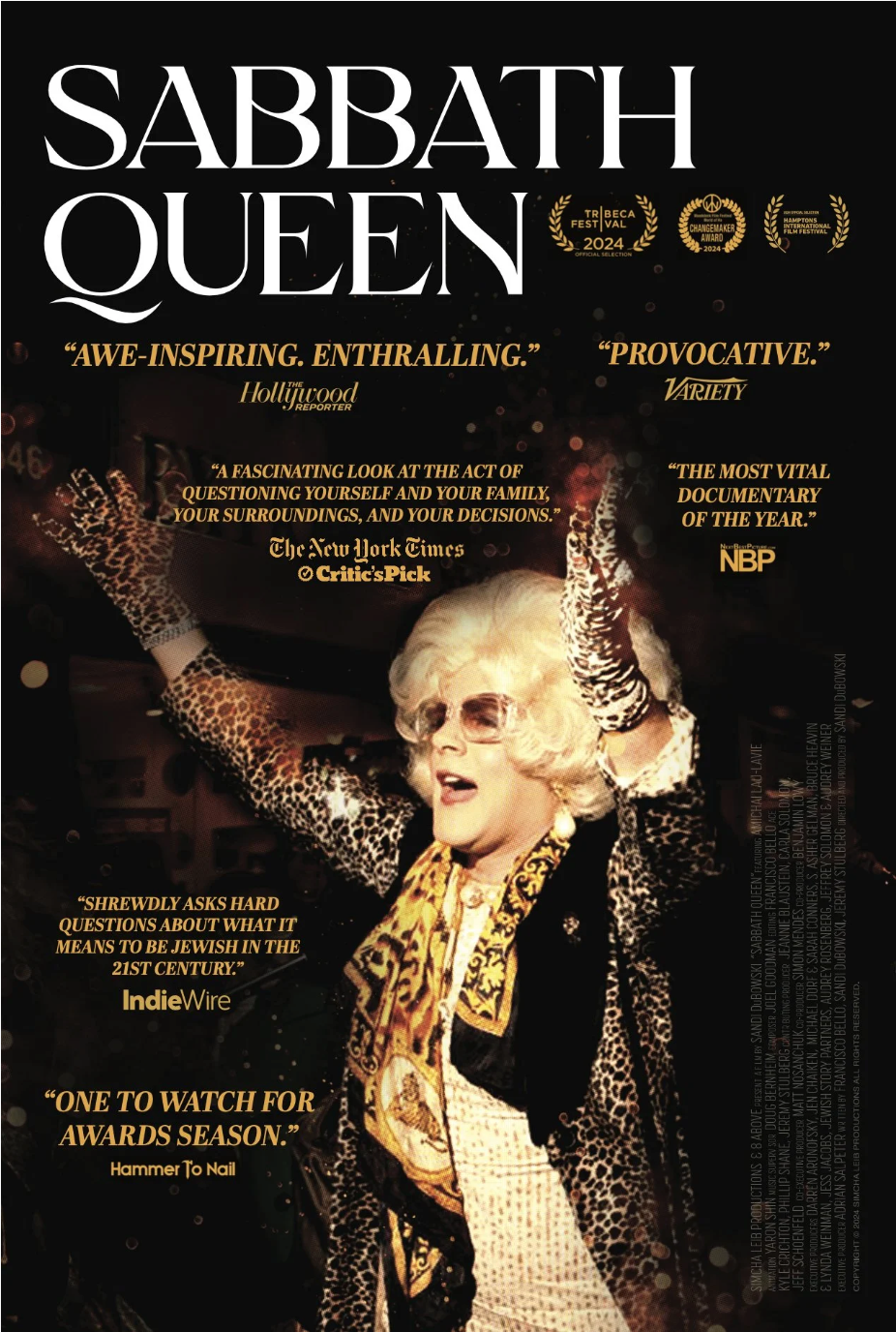
The film “Sabbath Queen” (2024), directed and produced by Sandi DuBowski, documents 21 years of controversial Rabbi Amichai Lau-Lavie’s life as he wades through the waters of modern Judaism and accepting queerness and interfaith within the conservative orthodox denomination. The film grapples with issues of homosexuality, conservatism, identity and expression, masculinity, and the Israeli Palestinian conflict.
Rabbi Lau-Lavie grew up in Jerusalem, the son of a Holocaust survivor and the nephew of Yisrael Meir Lau, Chief Rabbi of Israel (1993-2003), and among the 39th generation of consecutive Rabbis in his family history, dating back to the eleventh century. Having a family with such strong ties to Conservative Orthodox Judaism and being a homosexual man himself, Lau-Lavie founded Lab/Shul; a nondenominational, “God-optional,” Jewish congregation in New York, where liberal-leaning Jewish and interfaith families can still practice Judaism and spirituality regardless of identity. Lau-Lavie graduated from the Conservative movement’s Jewish Theological Seminary of America (JTS), where he earned his master’s degree and was ordained a rabbi. Controversially, Lau-Lavie supported and even ordained interfaith marriages between Jews and Gentiles, despite facing extreme backlash from his Conservative Jewish peers and even being disaffiliated with the Rabbinical Assembly, though still holding his Rabbinate title.
The title “Sabbath Queen” originates from Lau-Lavie’s drag persona, Rebbetzin Hadassah Gross, a Hungarian widow to six rabbis who gives lectures and motivational speeches via Hasidic teachings across the world, featured on Israeli magazine covers and talk shows, as well as The Museum of Jewish Heritage in New York City and the Burning Man Festival in 2003. Lau-Lavie uses the persona of Rebbetzin Gross to lecture about Judaism in an engaging performance, transforming the Torah into modern language.
Several points of contention within the film have to do with Lau-Lavie and his Orthodox Jewish family still living in Israel. When DuBowski interviewed Lau-Lavie’s late father, journalist and diplomat Naphtali Lau-Lavie, and brother, Rabbi Dr. Binyamin Lau, both men expressed distain for Lau-Lavie’s work in New York, namely his nondenominational congregation, homosexuality, and unorthodoxy.
After the screening of the film at Swarthmore on February 25, Director DuBowski, alongside a panel of colleagues and Swarthmore professors, spoke openly about the creation of the film and what it means to be a queer Jew in the 21st century and his filmmaking process over the two decades in which the documentary was filmed. “We developed a trust and an intimacy over the next five years, and only then, in 2003, did we start to film,” said DuBowski of Lau-Lavie. “It was just so inspiring, and so rebellious, and the drag, and counterculture. I was sort of mesmerized by the possibilities of Judaism beyond anything I knew growing up.” This sentiment encapsulates the entirety of Sabbath Queen, in which boundaries of typical Judaism are redefined.
