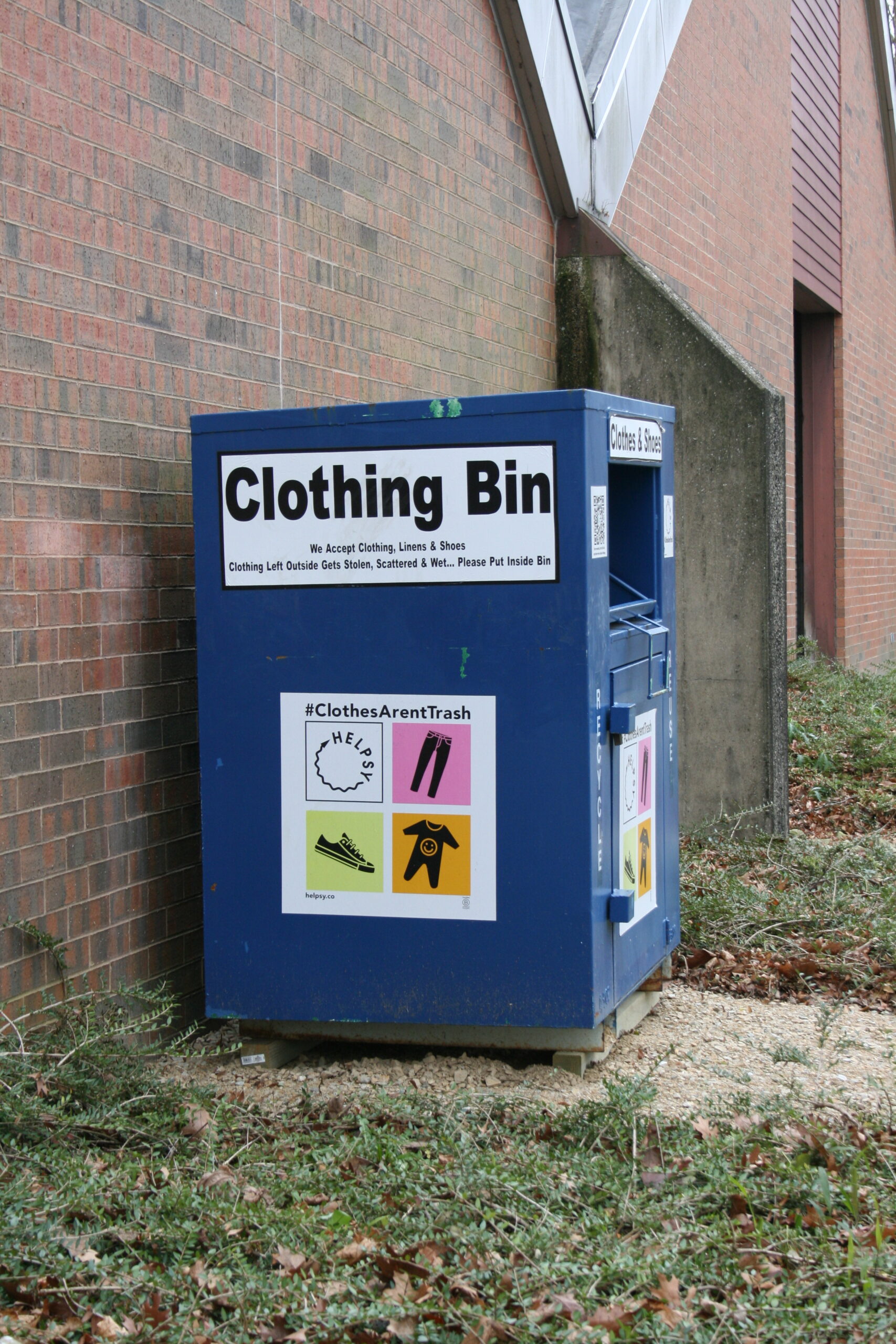
Helpsy, a clothing collection company aiming to reduce textile waste through donating or recycling used clothing, is now collecting clothing donations on Bryn Mawr’s campus. The box for donations is located outside the North wall of the Schwartz Fitness and Athletics Center. Students and staff can donate clothing, footwear, linens or other fabric items as listed on the Helpsy website. All items should be clean, dry and placed in a plastic bag before donating.
Helpsy is a B-Corp and Public Benefit Corporation keeping clothes out of the trash through donation initiatives. It was found in 2017 by friends Dan Green, Alex Husted, and Dave Milliner. According to Chief of Staff Lisa Sciannella over an email interview, they “created Helpsy as a certified B Corp and Public Benefit Corporation dedicated to environmental impact, job creation, and responsible textile recovery. Helpsy now collects over 100,000 pounds of clothing every day.” Donated clothing goes to a local facility, where usable clothes are separated and sent to thrift stores or sent to be recycled into other goods. Helpsy approximates that 95% of donated goods are usable, going into industrial production for insulation or stuffing if they are not suitable for wear. Helpsy has redirected over 32 million pounds of clothing from landfills and saved over 4 billion gallons of water and 600 million pounds of CO2 production from new clothing production.
Helpsy aims to expand access for responsible clothing disposal through more community partnerships and municipal drop-off programs and improving technology to increase the percentage of clothing sorted in-house. Currently, drop-off programs are available in Maryland, Virginia, Delaware, Pennsylvania, New Jersey, New York, Connecticut, Massachusetts, New Hampshire and South Carolina through collection bins, clothing drives and touchless home pickups. Bins are served approximately every 48 hours, and brands are brought to warehouses where they are organized based on brand, condition, and material. According to Helpsy, “Anything not suitable for wear is directed toward industrial reuse (such as wipers) or material recycling, where textiles can be turned into insulation, carpet padding, stuffing, or used as feedstock for emerging recycling technologies.”
