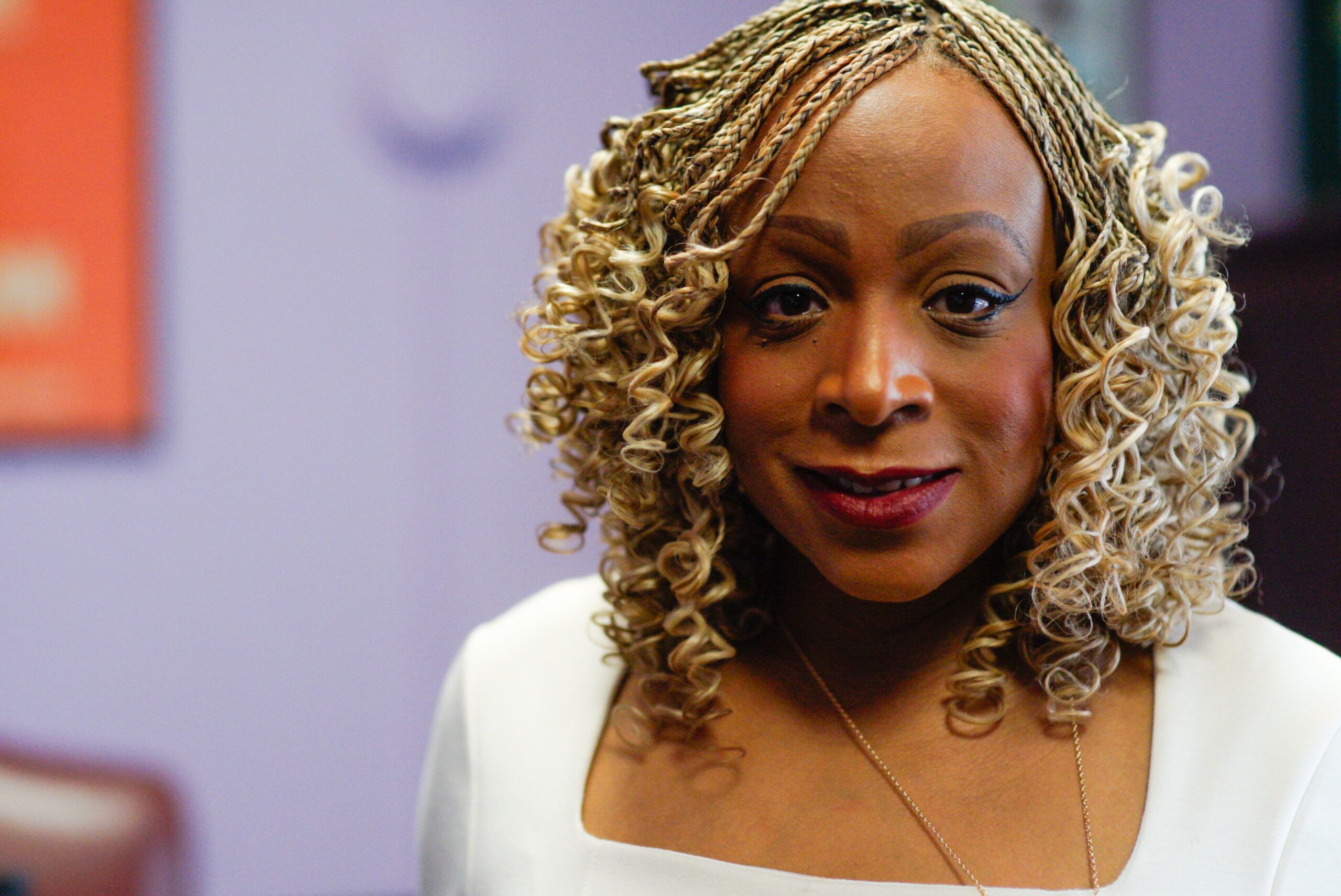
Last month, the National Park Service, under the directive of President Donald Trump, removed an exhibit on slavery from the President’s House in Philadelphia’s Old City. For Councilmember Jamie Gauthier, the move was just one part of what she sees as the Trump administration’s larger push to make Black Americans “second-class citizens.”
In the six years since Gauthier was elected, she’s made a name for herself as one of Philadelphia’s most prominent councilmembers. An urban planner by trade, Gauthier has helped to create Philadelphia’s Eviction Diversion Program, aided community land trusts with acquiring public land, and has been a leader in persevering and creating affordable homes across the city. She’s also been a key driver behind Philadelphia’s fight against gun violence. But Gauthier says that the challenges which Philadelphia and the nation are facing as a result of the current administration are the most significant she’s witnessed in her life.
The slavery exhibit at the President’s House was reinstalled this past Thursday after a court ordered the federal government to restore it. But the emotional impact of the move, which followed an executive order by Trump entitled “Restoring Truth and Sanity to American History,” remains.
To Gauthier, the removal of the exhibit was part of a wider effort to erase Black history in America and deny “that slavery not only happened [but led] directly to the conditions within Black communities [and the] inequities that Black people experience today.”

“I don’t ever remember existing through a darker time than we are in now,” Gauthier told The Bi-Co News. “But I also feel strongly like we have to fight for our society, for our democracy, and I don’t think that we get out of this without doing so.”
Gauthier, who holds a master’s in city and regional planning from the University of Pennsylvania, began her career working at nonprofits focused on affordable housing and equitable city planning. She’s been a program officer at the nonprofit Philadelphia Local Initiatives Support Corporation (PLISC), as well as the executive director of Fairmount Park Conservancy, an organization focused on revitalizing Philadelphia’s parks. But she ultimately chose to enter politics, believing that she could have a more direct impact on people’s lives through legislation.
“I’ve always kind of felt like, even though I love nonprofit work, nonprofits are somewhat constrained,” Gauthier said. “They’re not the decision makers as it relates to policy change. And so I thought that to have a bigger impact, especially on affordable housing issues [and] anti-displacement issues, that city council was the place to be.”
Gauthier—a born and raised Philadelphian—noted that much of her passion for political advocacy was a result of her familial influences. Her father, a civil rights activist and lawyer, instilled in her the desire to make Philadelphia a better and more equitable city: “I always had this notion that your career should be about making the community better and serving the public in some way,” she said.
In 2019, when Gauthier was elected to represent Philadelphia’s 3rd District, she upended a political dynasty that had lasted 45 years. Previously, Jannie L. Blackwell had held the position for 28 years. Before that, Blackwell’s husband had represented the district for 17 years.

Policy & Legislation
When Gauthier first took office, she says her efforts were largely focused on affordable housing, since that was where her expertise lay. But as gun violence across the cities rose dramatically during the COVID-19 pandemic, she felt an obligation to help confront it.
“I can’t even fully describe for you the horror that was the pandemic, and not just because we were dealing with this global health crisis, the likes of which we’ve not seen anything like that in a century, but almost immediately, as Covid was spreading, gun violence was spiking to levels that I had not seen since my childhood,” Gauthier said.
Inspired by how the city had come together to tackle COVID-19, Gauthier thought that if Philadelphia’s officials were to confront gun violence with the same level of urgency, the crisis might be manageable.
“My first thought was, like, in the same way that all of the city’s agencies were focused on COVID as a public health emergency, we could have used much the same response for gun violence,” Gauthier said. “But in this case, we were mostly talking about Black people, young Black men, dying. And to me, it was unjust that the only answer that we can think of to that was to have police show up.”
Gauthier says it was at this time that she began to call on former Mayor Kenney to declare a public safety emergency because of the rise in gun violence. In 2021, she introduced a declaration into the city council, which was passed by 14 out of 17 councilmembers.
Kenney failed to heed her call. In a comment to Billy Penn WHYY shortly following his rejection, Mayor Kenney expressed concern over the possible imposition on civil liberties and said that Philadelphia would need to have a conversation about “the definition of what the emergency declaration would accomplish.” Mayor Cherrelle Parker, however, signed the declaration soon after her inauguration.
“Gun violence tends to happen and in the exact same spots or in proximity to the exact same spots, over and over and over and over, and much of the time, they correlate to redline neighborhoods and disinvested neighborhoods,” Gauthier told the Bi-Co News. Redlining refers to a practice which for decades led to certain neighborhoods—primarily those where a majority population was made up of ethnic and racial minorities—being subject to discriminatory housing practices, such as a denial of services like mortgages and insurance loans.
In the two years since the declaration was adopted by Parker, homicide rates have dropped to the lowest they’ve been since 1966. Under Parker, Philadelphia’s office of public safety has also invested nearly $24 million in grants dedicated to combating gun violence across the city.
At times, Gauthier has voted at odds with the council’s more progressive members. In April 2025, she voted for a budget proposal that eliminated the city tax on businesses’ gross sales and also reduced the tax on corporate profits from 3.2% to 2.8%. But Gauthier has also managed to push through many of her own progressive policies during her time in the city council, including bills on affordable housing production and the bolstering of protections against housing discrimination.
“We Can Win”

“I’m a Black woman, so I can talk to you about experiencing racism, experiencing sexism, experiencing misogyny, but I don’t think we’ve had to fight, even myself as a Black woman, like our ancestors had to fight. And we don’t just get off the hook.”
For many students, not just within the Bi-Co Consortium, but across the country, Trump’s unprecedented influence on academic freedom, as well as a dramatic shift in presidential approaches to democratic norms, has led to a sense of fear and hopelessness. But Gauthier says that now is not the time to “rest in despair.”
“There have been people who fought and died for the right to vote, for our democracy to exist, for civil rights, and now it’s our turn,” Gauthier told The Bi-Co News. “But I also believe that we can win. I believe in people power, and I believe that if we stand together, there are more of us than there are of these horrible people.”
