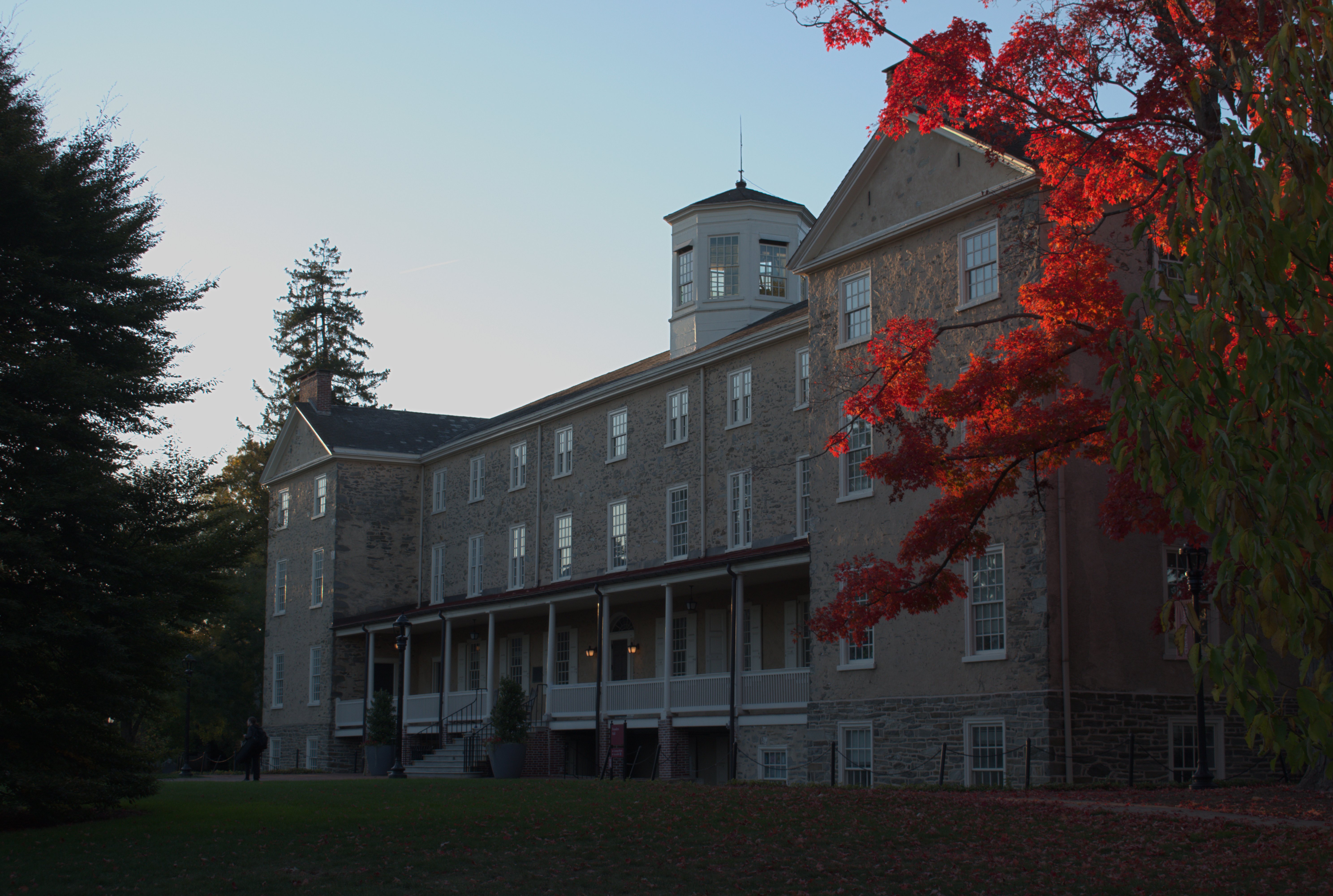
Residents of Haverford’s Latinx Cultural Center (LCC) expressed dismay at the campus-wide funding reallocation put into play at the beginning of this school year. The funding changes seek to distribute funding more widely, but LCC residents feel that their house has been treated unfairly, especially as they were not notified of funding changes until they arrived in the fall to move into the LCC.
Residents alleged that during the spring interview process for living in the LCC, they were informed by members of the Race and Ethnicity Education Office that if they were selected to live in the LCC, they would have access to two areas of funding: “one for events and one for house improvements,” as stated by a LCC resident. After being approved to live in the house, residents moved in during the late summer and discovered that the house was lacking several kitchen items. One resident stated, “We didn’t have basic things like a microwave, which even first-year dorms had; we didn’t have an air fryer, a toaster, like really basic things.”
When the residents approached Haverford’s Residential Education & Student Engagement (RESE) office about accessing the funds for the house they’d discussed in their interviews so they could buy kitchen items like a microwave, they were surprised to find that the fund for house improvement no longer existed. One resident stated, “They basically told us that they couldn’t do anything about it.”
Scott Wojciechowski, the Dean of Residential Life who oversaw the funding changes, made it clear that a microwave was procured for the house almost immediately. He commented, “I haven’t spoken with them since we got their microwave back, but I will share that if there’s anything that’s a major glaring error, or something that would be mission critical, there are still budget possibilities, it’s just not given as freely.” Wojciechowski further explained that although the budget for RESE remained unchanged, funds were reallocated due to issues voted on by the Student Government. “Our budget line has remained flat, but there have been other costs that have impacted that,” he said, citing increases in student wages and the cost of early arrival meals as major factors.
One LCC resident expressed frustration over the lack of funds, noting that the residents of the house are primarily first-generation or low-income students. “Everyone in our house is either a first-generation student or a low-income student, so all those little things can financially impact us,” the resident explained. “For the low-income students, we have access to emergency funding per semester, but it’s limited. And for me, for instance, I had to ask for money for kitchen supplies.” Another LCC resident added, “This is a living space and should be provided the adequate funding to properly reside here.”
Dr. Diamond Howell-Shields, the Director of the Race and Ethnicity Education Office, explained that the funding changes were not limited to the Affinity Houses. “A lot of the houses have had funding changes, and so it’s important to note that it wasn’t just the affinity houses.” She added, “It is unfortunate when you anticipate that you have funds to be able to use at your discretion at the beginning of each semester, and it’s not there.”
Haverford has also recently hired Amy Miller, a new Residential Education Coordinator for Returning Student Communities, who is trying to help affinity housing residents with tasks like budgeting their resources and helping them advocate for themselves. Of her position, Miller said, “I think for reasons that I’m still trying to figure out and learn, a lot of students don’t seem to be aware of my position and its existence, or students sometimes think they’re out on their own, but I want to be an advocate.”
In light of the budget reallocation, LCC residents aren’t optimistic about the prospect of getting additional funding, and still lack an air fryer and a toaster. “If we don’t ask, and we don’t try really hard, we’re not even going to get basic necessities,” said an LCC resident. “Mostly it comes down to just [that] it has to come from our pockets.”
