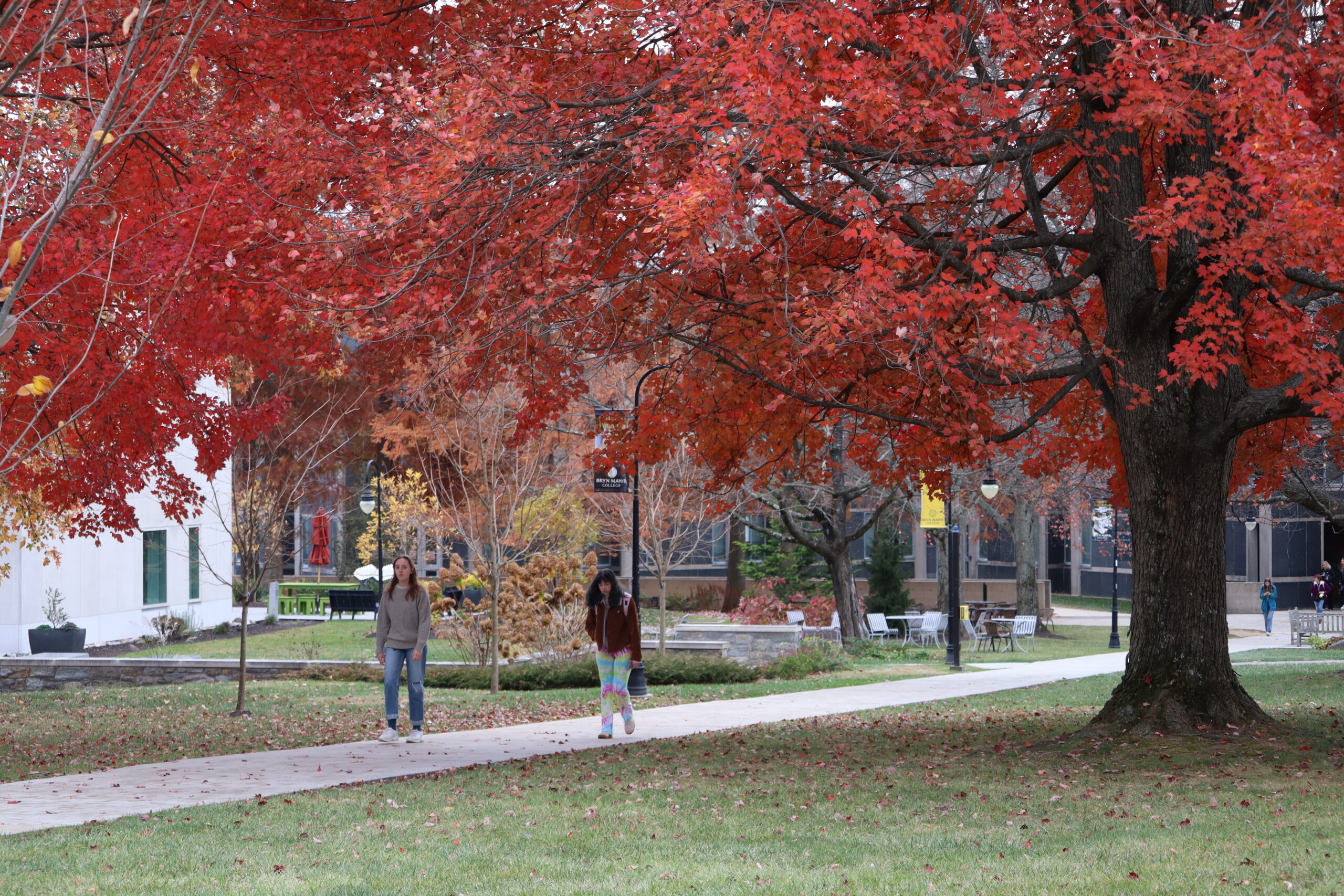
It is relatively common for both public and private secondary education institutions to increase their tuition annually, a practice coined as tuition inflation. Bryn Mawr College is no exception to this pattern, with a predicted 4% cost increase beginning with the 2026-27 academic year, bringing the cost of tuition from $67,730 for the 2025-2026 year up to an estimated $70,440.
One of the ways that colleges often aim to alleviate such financial stress is by providing on-campus job opportunities. The ability to work without having to leave campus alleviates some of the inequities that typically accompany the job search, such as access to transportation, flexibility in scheduling, and internet access.
The role that student workers play as members of the campus community is invaluable. It is thanks to student workers that the libraries and the dining halls run as efficiently as they do, or that students can access the bookstore, mailroom, and so much more for as many hours of the week as they can.
Currently, student workers at Bryn Mawr College earn wages ranging from $14.00 to $15.60 an hour, depending on the number of years in the position and the responsibilities associated with their respective role. This is relatively middle ground, with Haverford student workers receiving a minimum of $12.50, and Swarthmore student wages ranging from $15.50 to $17.00.
In the context of increased wages and a general increase in the cost of living increase of roughly 2.8% in 2026, it is imperative that the College considers ways to lessen the financial burden faced by students. It is often the case that student workers are from lower-income backgrounds or are recipients of federal work studies, and are relying on wages to help support their education.
Additionally, Bryn Mawr college is an academically rigorous institution, and time and energy spent working is at the expense of time and energy devoted to studying and learning. Increasing student wages might allow student workers to lessen their hours, leaving more time for classes and for personal health and well-being.
One solution to better financially support student workers would be to implement competitive pay, where those who have more financial need would have the opportunity to earn higher wages. Systemic inequalities run deep and no single wage increase could fully account for that, but being more mindful of the unique situations of each student might result in students getting paid closer to what they deserve.
It is also crucial that student wage is evaluated with respect to external events and circumstances, namely the cost of living and the recent significant cuts and attacks aimed at financial aid institutions; it should not be looked at as an isolated decision.
Our institutions would not function without student workers, and it is absolutely necessary that we work to alleviate the financial stress that affects so many members of our community wherever we are able to. Fully compensating student workers for the efforts and sacrifices that they make is an important step in this direction.
